Materia Prima Centre
Residency
Chinchón, ES 2025
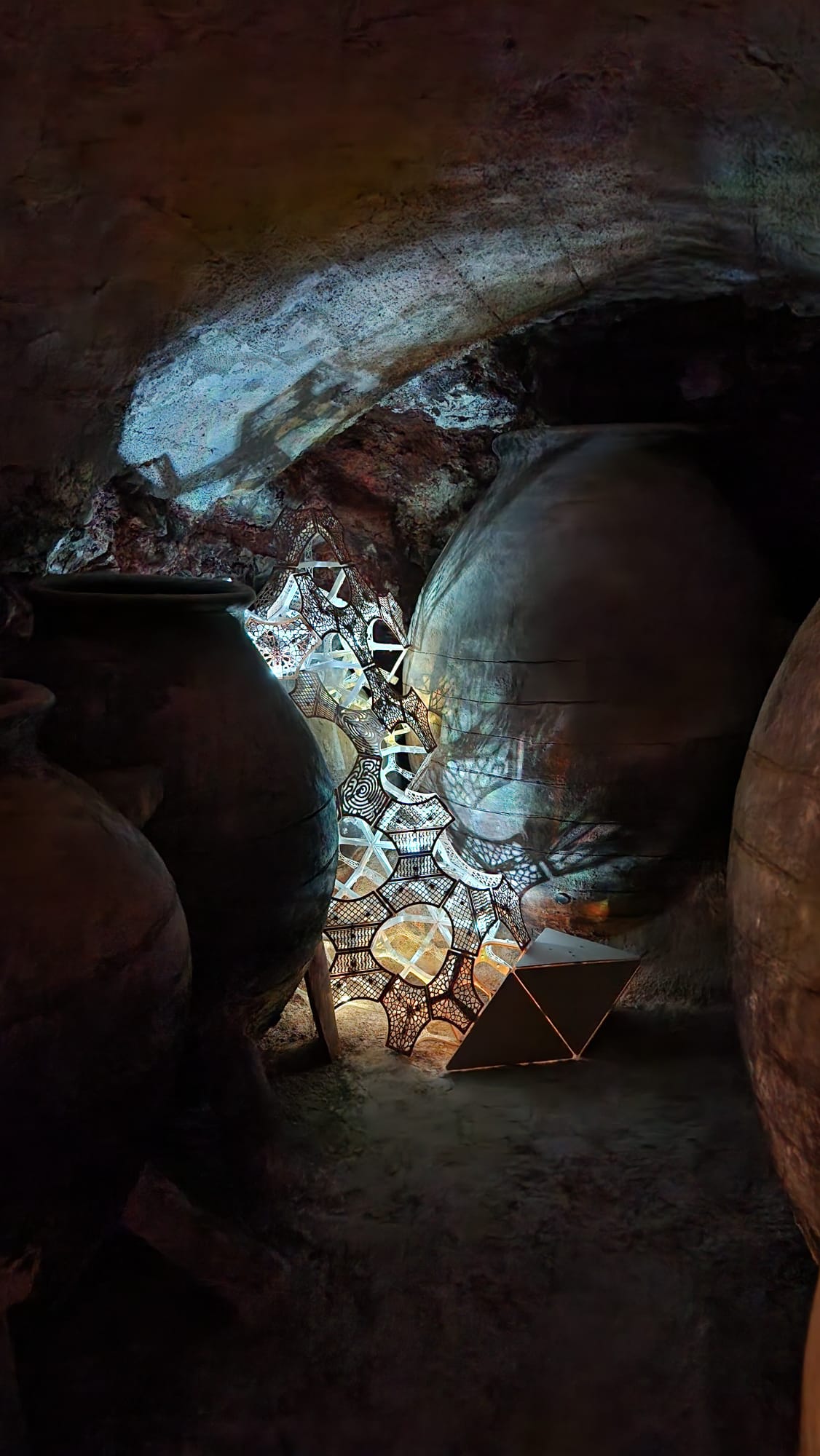
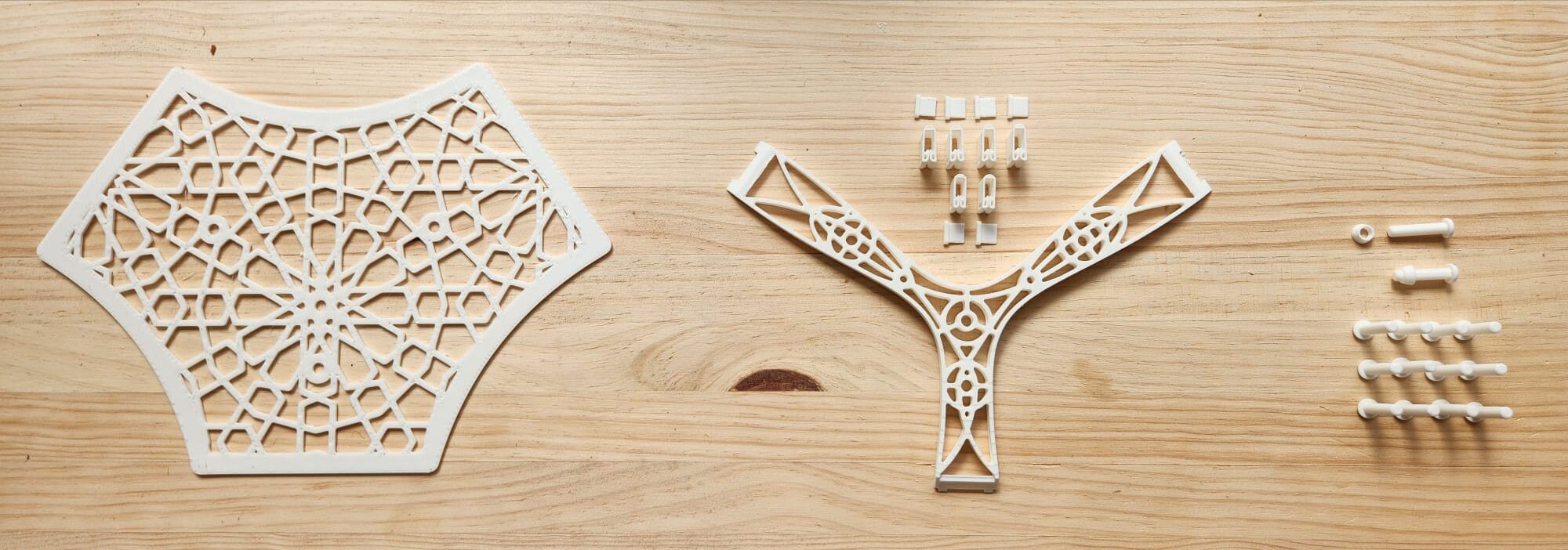
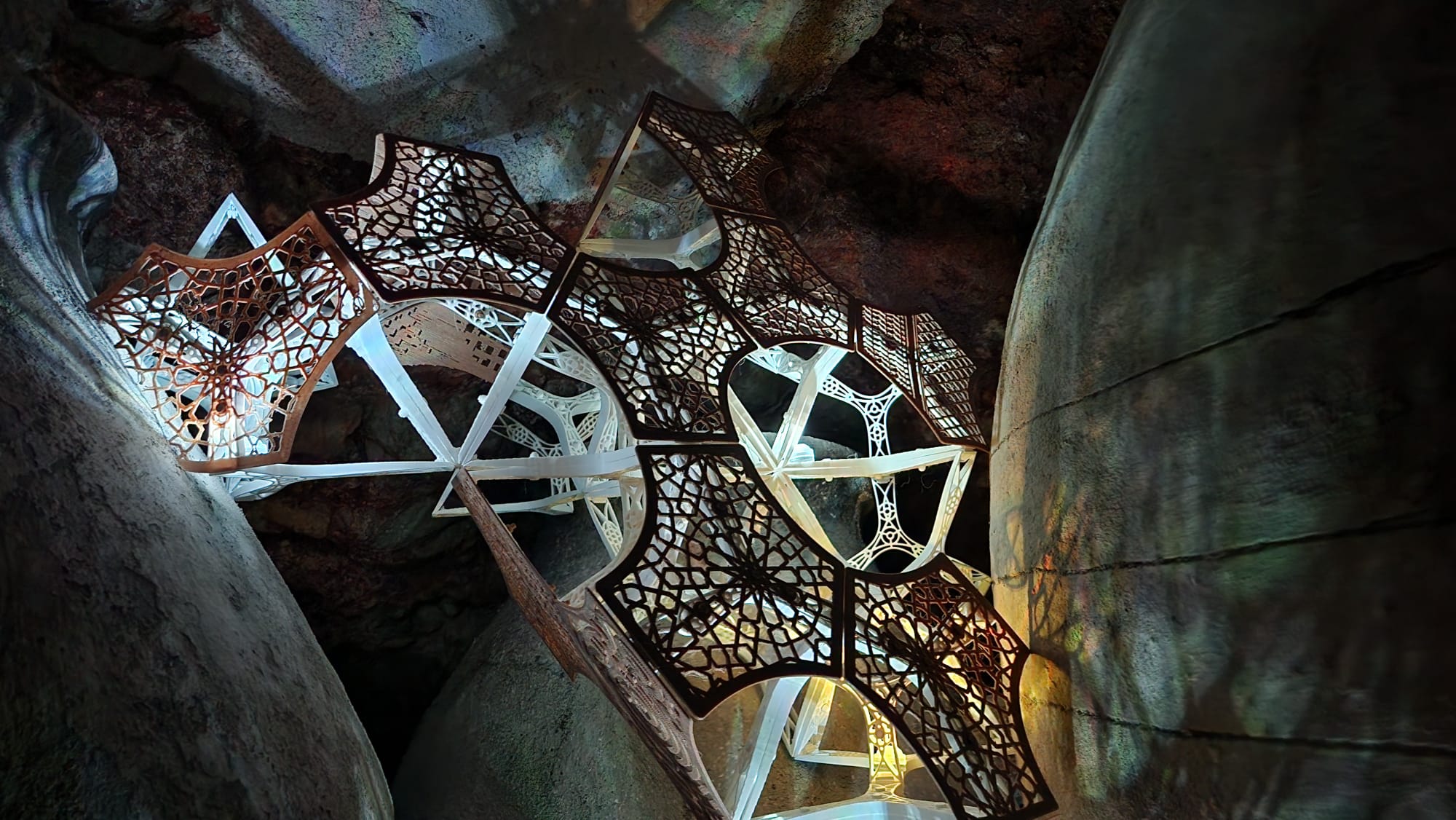
Materia Prima is housed in an old winery situated above one such set of caves. The artist residency program offered room, board, and full equipment and materials for the project’s month-long duration, including 3d-printers and filament. Notable in this installation is the use of locally produced olive pit filament for the light-manipulating patterned panels, made from an agricultural byproduct of the surrounding farms.
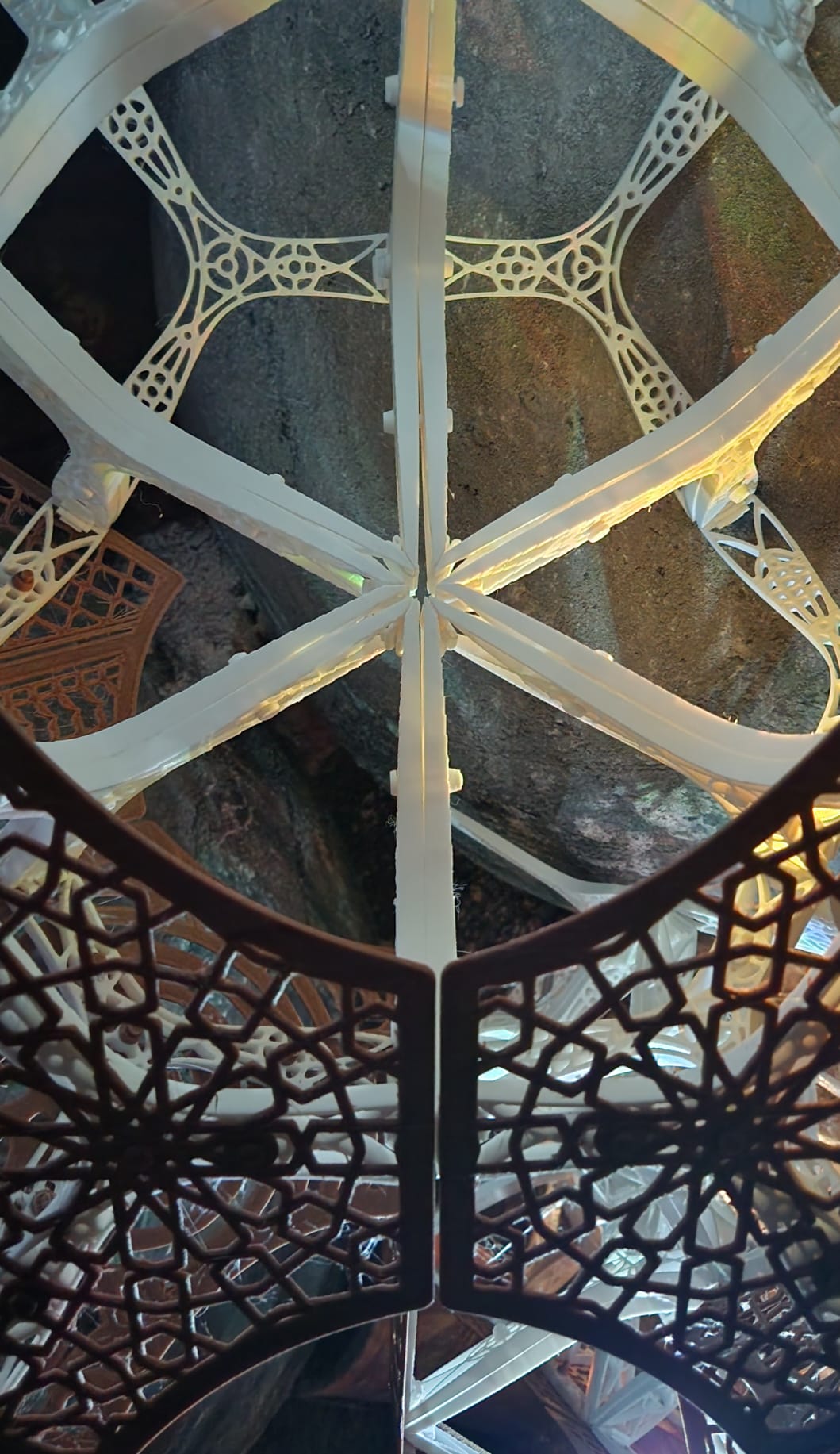
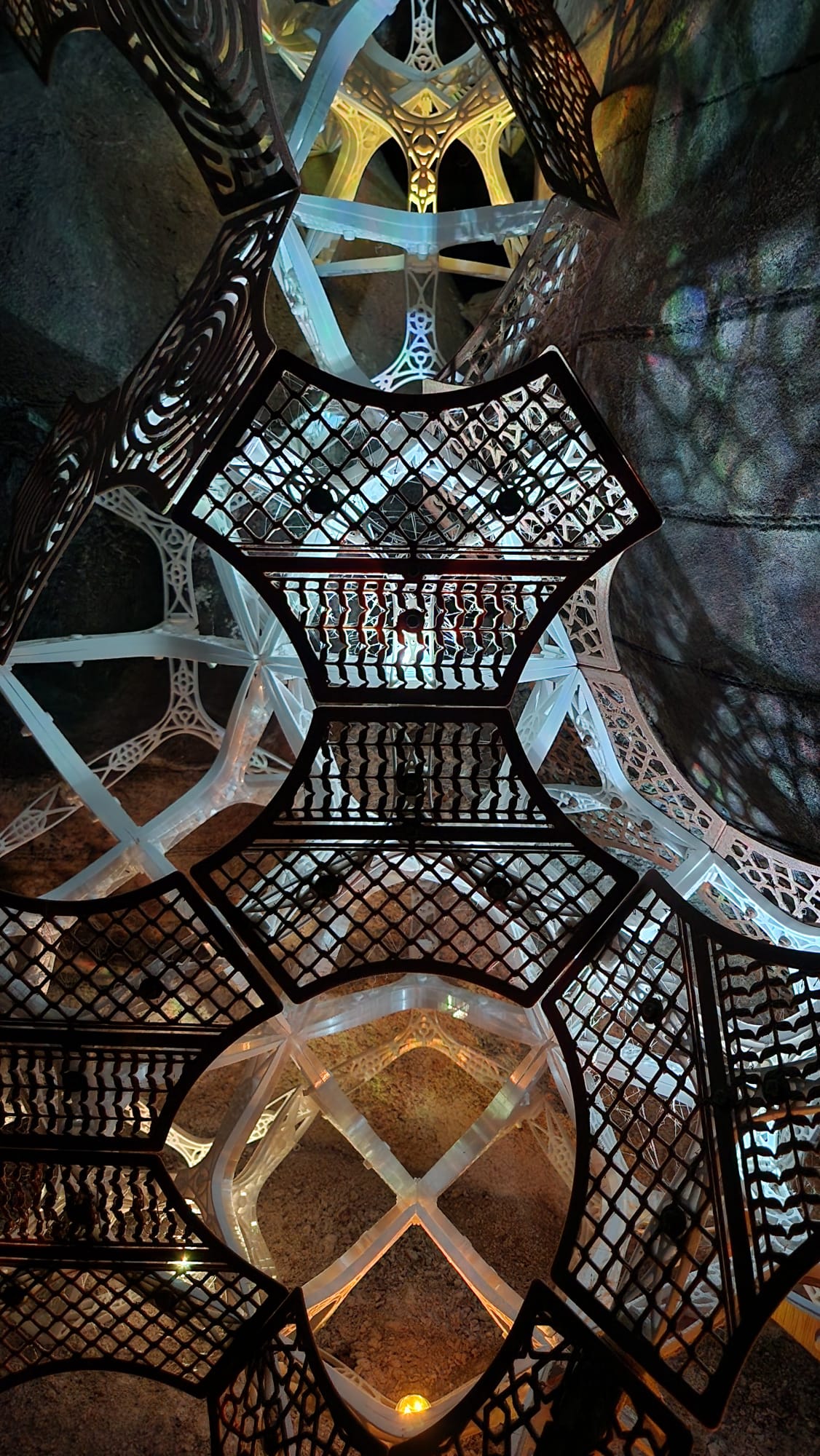
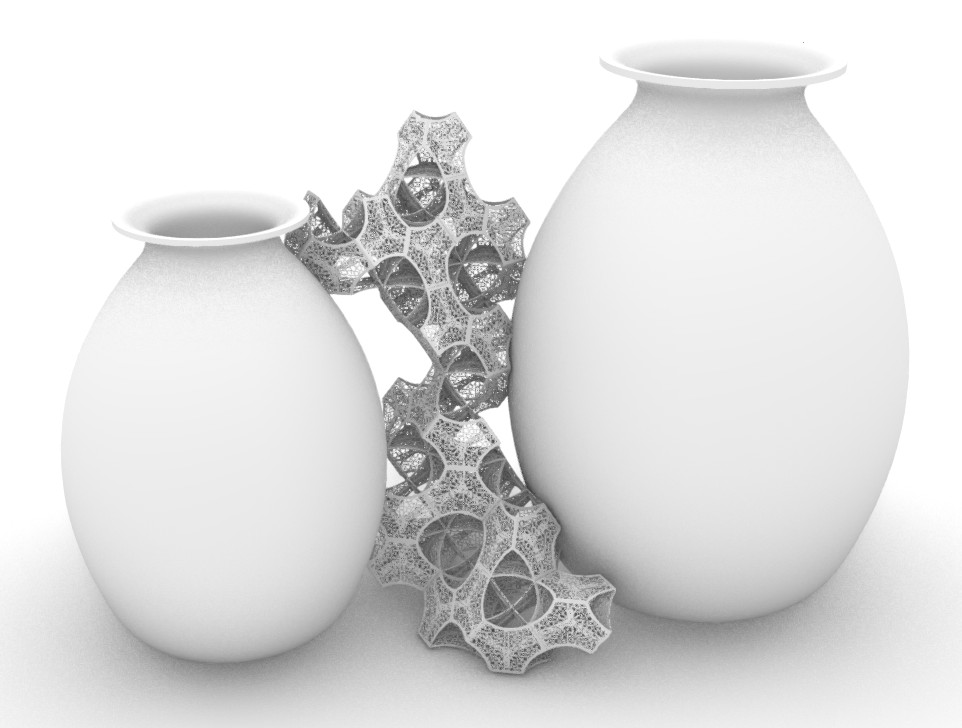
Tectonically, the installation uses third generation components of the PyraMod system, developed over the previous three years as a 3d-printed modular building system. PyraMod uses a truncated right-angle tetrahedron, composed of four 3d-printed panels, as the basic building module. This shape is a space-filling polyhedron and as such always forms a complete, structurally integral spaceframe.
The overall form comes from an organic accretion of modules in the space between two gigantic wine barrels, and is made in such a way that the structure can be extended throughout the cave in the future. LED lights illuminate the interior, casting geometric shadows through the screening tiles. Patterns inspired by Andalusian, Moroccan, Palestinian, and West African geometric traditions can be seen.
The installation is situated within the wine caves of Chinchon, an 18th century vestige of the village’s wine-making industry. These caves originally formed a connected network beneath the whole town, doubling as a resistance stronghold for the Republicans during the Spanish Civil War of 1936-1939.
Project Leads
- Mark Francis
Materia Prima Co-founders
Pablo Sevilla
Guillermo Gil Fernández